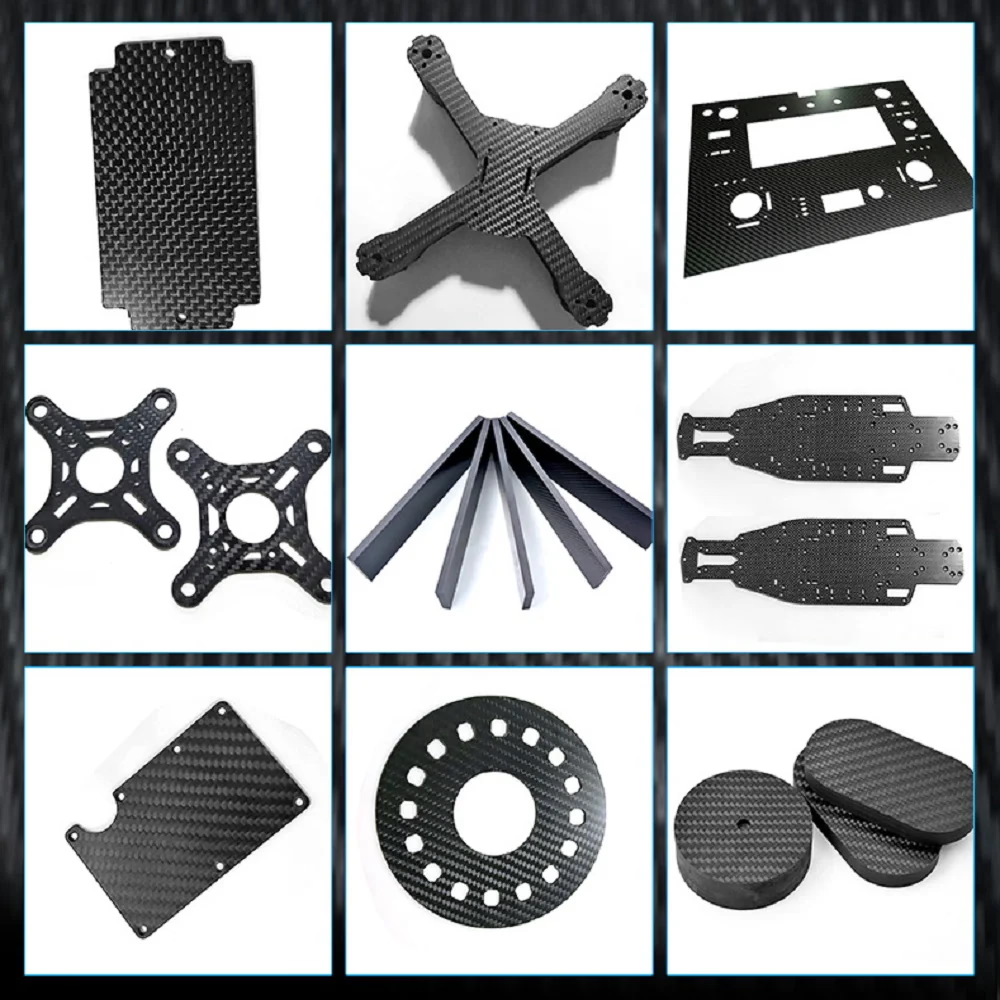
Key Directions for Carbon Fiber Processing Plants to Unlock Future Markets
With the rapid advancement of drone technology, carbon fiber composites have become the “golden material” in drone manufacturing due to their lightweight, high strength, and corrosion resistance. For carbon fiber processing plants, embracing this trend is not only an opportunity for technological advancement but also a key strategy to dominate future markets. This article delves into the application prospects of carbon fiber in drones and explores how processing plants can stand out through innovative techniques and optimized processes.
I. Core Advantages of Carbon Fiber in Drones
- Perfect Balance of Lightweight and High Strength
Carbon fiber composites have a density of 1.75-2.0 g/cm³, 30%-50% lighter than traditional metals, while offering a tensile strength of up to 3,500 MPa—7 times that of steel. This significantly enhances a drone’s payload capacity and flight endurance. For example, DJI’s Mavic series drones use carbon fiber frames to achieve structural strength while maximizing portability. - Exceptional Environmental Adaptability
Carbon fiber composites withstand extreme temperatures (-150°C to 280°C) and resist corrosion, making them ideal for harsh environments like deserts, rainforests, and polar regions. The U.S. MQ-9 Reaper military drone, for instance, utilizes a carbon fiber body for stealth and long-duration reconnaissance missions. - Design Flexibility and Manufacturing Efficiency
Carbon fiber enables complex, integrated designs through processes like compression molding and autoclave curing, reducing part counts and assembly steps. For example, sandwich structures (carbon fiber skin + honeycomb core) reduce weight while improving bending stiffness. - Sustainability and Eco-Friendliness
Carbon fiber production generates minimal waste and supports recycling, aligning with global green manufacturing trends. China’s Wing Loong drone, with its full-carbon fiber body, reduces maintenance costs and carbon emissions.
II. Applications and Market Opportunities for Carbon Fiber Drones
- Military and Security
- Advantages: Stealth, long endurance, and anti-jamming capabilities for reconnaissance, border patrol, and counter-terrorism.
- Market Potential: The global military drone market is growing at 12% annually, driving demand for carbon fiber airframes.
- Agriculture and Crop Protection
- Advantages: Lightweight frames enable larger pesticide payloads and longer flight times. For example, a 16L-capacity carbon fiber agricultural drone can cover 150 acres per hour while reducing pesticide use by 20%.
- Market Potential: Over 30,000 agricultural drones operate in China, with carbon fiber part adoption accelerating.
- Surveying and Logistics
- Advantages: Lightweight design supports high-payload equipment (e.g., LiDAR) for complex terrain mapping.
- Market Potential: The global surveying drone market is projected to exceed $5 billion by 2025, boosting demand for carbon fiber components.
III. Technical Upgrades for Carbon Fiber Processing Plants
- Optimizing Core Processes
- Prepreg and Autoclave Molding: Improve layering precision and curing efficiency to ensure high mechanical performance.
- Automation: Introduce automated fiber placement (AFP) robots to reduce errors and increase output.
- Customized Solutions
- Design specialized parts (e.g., wings, rudders, pressure vessels) for different drone types (multirotor, fixed-wing).
- Offer end-to-end services (design, simulation, production) to shorten client R&D cycles.
- Addressing Industry Challenges
- Cost Reduction: Scale production and adopt waste recycling (e.g., bio-based resins) to lower material costs.
- Sustainability Compliance: Develop recyclable carbon fiber technologies to meet EU and North American regulations.
IV. Future Trends: Innovations in Carbon Fiber Drones
- Smart Composites
- Integrate sensors and self-healing functions to monitor and repair damage in real time, enhancing safety and lifespan.
- 3D Printing
- Use additive manufacturing to produce complex geometries (e.g., biomimetic wings) while minimizing material waste.
- Multifunctional Integration
- Develop electromagnetic shielding and radar-absorbing coatings for military stealth requirements.
Conclusion: Strategic Opportunities for Carbon Fiber Processing Plants
The explosive growth of the drone industry presents unprecedented opportunities for carbon fiber processing plants. By advancing automation, sustainable practices, and tailored solutions, plants can capture value in this high-potential market. For example, Jiangsu Boss Carbon Fiber has partnered with defense agencies to develop hypersonic target drone components and electro-optical pod housings, showcasing carbon fiber’s role in cutting-edge applications.
Action Steps:
- Strengthen R&D collaborations with drone manufacturers.
- Invest in recycling technologies to lead in sustainability.
- Monitor policy shifts (e.g., low-altitude economy pilots) to capitalize on regional growth.
Carbon fiber is not just the “skeleton” of drones—it is the foundation of tomorrow’s intelligent aerial systems. By staying ahead of technological trends, processing plants can ride the wave of this booming industry!